
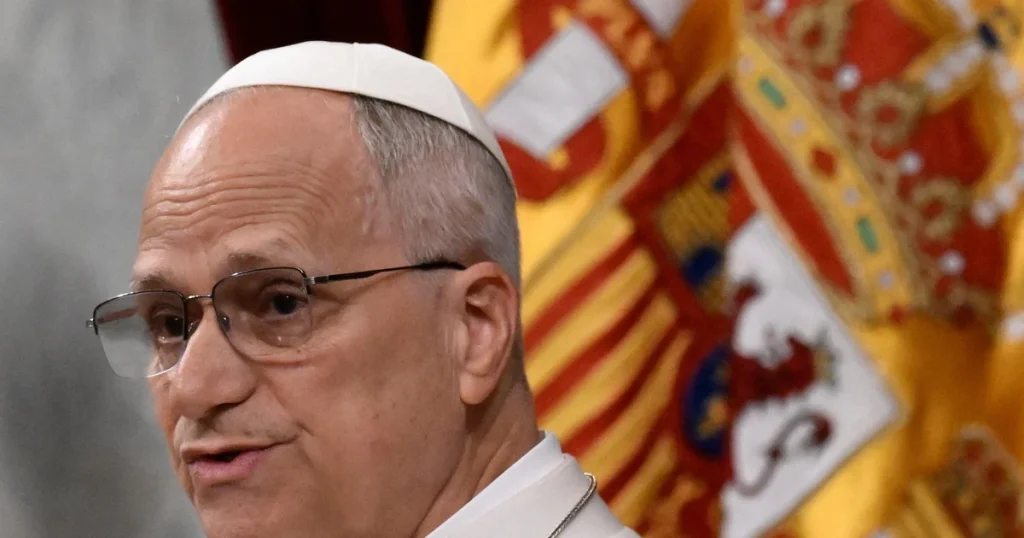
Pope Leo XIV Condemns Sexual Abuse Scandal in Catholic Clergy
Wertynews.com – Pope Leo denounces what he calls “the scourge of sexual abuse” by Catholic clergy, emphasizing its pervasive impact on victims during a pivotal meeting in Spain. On Monday, the pontiff delivered a strong statement against the abuse, framing it as a critical challenge for the Church’s moral authority. His remarks came ahead of a private audience with survivors, where he reiterated the need for a “culture of care” to address the issue. “The most painful moments occur when those entrusted with our trust and well-being become the source of harm,” he told Spanish bishops, underscoring the urgency of the problem.
The Scourge and the Vatican’s Response
“Faced with this scourge, the ecclesial community must respond with listening, truth, justice, reparation, and a renewed focus on prevention,” the Pope said to Spanish bishops.
The Vatican’s commitment to reform was highlighted as the Pope sought to reconcile with victims through direct engagement. Representatives from advocacy groups, however, noted that the selection of participants for the meeting was limited, with some organizations expressing concern over the exclusivity of the event. Juan Cuatrecasas of Infancia Robada criticized the decision, stating, “We are disappointed that the Pope favors a smaller group over a broader and more representative assembly. Our voices must be heard as part of the Church’s healing process.” This sentiment reflects a broader call for transparency and inclusion in the Church’s response to the crisis.
The Pope’s address also included a commitment to rectifying past failures, acknowledging that the sexual abuse scandal has eroded public confidence in the institution. During the meeting, he outlined plans for increased accountability, including the establishment of independent oversight bodies and the integration of victim testimonies into Church doctrine. “We cannot allow this scourge to persist without action,” he declared, vowing to prioritize the well-being of survivors in all Church decisions.
Global Advocacy and Policy Remarks
As the Pope’s visit progressed, he extended his message beyond the scandal to address global challenges. In a surprise address to the Spanish parliament, he called for a unified approach to migration, describing it as a “tragic drama” that requires compassion and collaboration. His remarks were met with a standing ovation, signaling the high regard in which his leadership is viewed. “Migration is not just an issue of borders, but of shared humanity,” he stated, urging European nations to create “safe and legal pathways” for displaced individuals.
The Pope’s focus on migration contrasted with the political tensions within Spain. While Prime Minister Pedro Sanchez advocated for open immigration policies, his government faced pressure from conservative factions, including the Popular Party and Vox, which sought stricter controls. The pontiff’s advocacy for patient dialogue over conflict echoed his earlier stance on the abuse scandal, where he stressed the importance of sustained efforts rather than quick fixes. “Weapons may silence temporarily, but they cannot create lasting peace,” he emphasized, linking the need for unity in migration to the broader goal of fostering trust in the Church.
His speech also touched on the role of faith in addressing societal issues, positioning the Church as a key player in humanitarian efforts. “The Church must be a beacon of hope, not a symbol of neglect,” he argued. This message resonated with attendees, who saw the Pope’s visit as an opportunity to reinvigorate the Church’s moral standing through concrete actions.
Historical Context and Compensation Agreement
Spain’s national ombudsman reported in 2023 that approximately 200,000 children had been sexually abused by clergy since 1940, a staggering figure that underscores the long-standing nature of the crisis. The Pope’s visit coincided with a significant development: a compensation agreement signed in March between Spain’s government and the Catholic Church. This pact marked a turning point, as the Church had previously resisted financial reparations for victims. The agreement aims to provide financial support and public acknowledgment to survivors, signaling a shift toward greater accountability.
The Pope’s seven-day visit to Spain included stops in Barcelona and the Canary Islands, where he highlighted the intersection of the abuse scandal and migration. In Barcelona, he blessed the newly completed tower of the Sagrada Familia Basilica, a symbol of architectural and spiritual legacy. Meanwhile, in the Canary Islands, he joined Sanchez to honor migrants who perished during dangerous sea crossings from Africa. “Their lives must not be lost in silence,” the Pope said, drawing parallels between the suffering of abuse victims and the plight of displaced communities.
These visits underscored the Pope’s strategy of combining symbolic gestures with practical reforms. By addressing both the historical trauma of abuse and the ongoing challenges of migration, he sought to present a comprehensive vision for the Church’s future. “We must look back to learn, but also forward to act,” he declared, reinforcing his commitment to healing and progress.
Reforms and the Path Forward
In addition to the compensation agreement, the Pope outlined specific measures to prevent future abuse. These included mandatory training for clergy on child protection, stricter reporting mechanisms, and the establishment of a dedicated office to oversee investigations. “The scourge of sexual abuse is not just a historical issue—it is a present-day challenge that demands our full attention,” he said. The reforms, he argued, would require a cultural shift within the Church, prioritizing victims’ voices over institutional interests.
His remarks were met with cautious optimism from some survivors, who viewed the changes as a step toward justice. “It’s a start,” said one advocate, “but we need more than words—we need systemic change.” The Pope’s emphasis on prevention aligned with calls from global organizations to address root causes of abuse, such as power imbalances and secrecy within the clergy. “We must ensure that no child is left behind in this fight,” he added, reiterating the central theme of his visit.
As the Pope concluded his visit, the focus remained on the Church’s evolving role in society. By confronting the scourge of sexual abuse and engaging with victims directly, he aimed to restore faith in the institution. “The Church is not perfect, but it is willing to change,” he stated. This message, delivered with conviction, set the stage for continued dialogue and reform in the years ahead.