
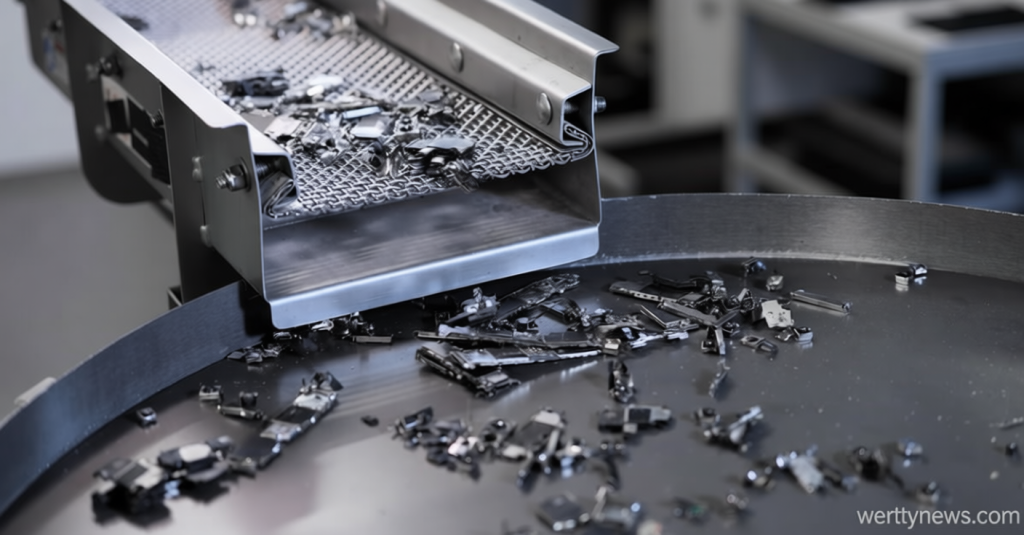
How Recycling Could Help Power America’s Rare Earth Future
Wertynews.com – How recycling could help power America’s transition to sustainable technology is becoming a critical focus for policymakers and industry leaders. As demand for rare earth elements continues to rise, driven by advancements in renewable energy and electronics, the U.S. is exploring innovative ways to reduce its reliance on foreign imports. While mining remains a primary source, experts now highlight that recycling offers a promising alternative—reviving discarded materials to meet the nation’s growing needs.
Unlocking the Potential of Rare Earth Elements
Rare earth elements, a group of 17 metallic compounds essential for modern technology, play a pivotal role in everything from electric vehicles to medical imaging devices. These elements are not only integral to consumer goods but also to national defense, as seen in the F-35 fighter jet, which requires approximately 100 pounds of rare earths for its advanced components. China currently controls a significant portion of the global market, making supply chain stability a strategic concern for the U.S.
How recycling could help power America’s future lies in its ability to reclaim these valuable resources from existing waste streams. Unlike traditional mining, which involves large-scale extraction and environmental degradation, recycling offers a more efficient and eco-friendly approach. By reprocessing materials from old electronics, retired machinery, and decommissioned infrastructure, the U.S. can significantly reduce its dependence on new mines while mitigating environmental harm.
Overcoming the Challenges of Rare Earth Recycling
Despite its potential, rare earth recycling is not without hurdles. The process requires sophisticated techniques to isolate minute quantities of these elements from complex materials. For instance, a single smartphone may contain just a fraction of a gram of rare earths, necessitating the processing of millions of devices to yield meaningful amounts. This complexity has led to higher costs and lower efficiency compared to traditional mining methods.
Julie Klinger, a professor at the University of Wisconsin–Madison, underscores the importance of structured recycling systems. “You