
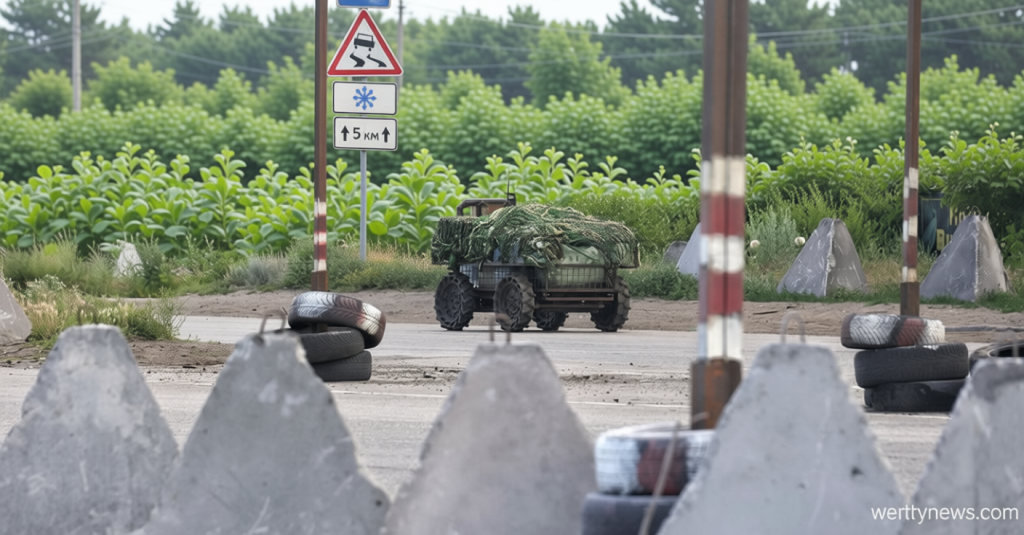
Army Considering Domestic Ranges for Ukraine-Style Electronic Jamming Tests
Wertynews.com – The U.S. Army is exploring the use of two domestic testing ranges to simulate the advanced electronic jamming tactics observed in the ongoing conflict in Ukraine. This initiative, led by Army Secretary Dan Driscoll, aims to replicate the contested battlefield environments where Ukrainian forces have effectively countered Russian drone operations through sophisticated jamming systems. By integrating these ranges into the Army’s training and evaluation framework, officials hope to better prepare for future threats that could emerge from similar technologies being adopted by adversaries around the world.
Driscoll recently highlighted the importance of these tests during a briefing, emphasizing that the Army needs to “create a contested environment that mirrors real-world electronic warfare.” This approach will allow drone developers and counter-drone systems experts to test their equipment in conditions that closely resemble those in Ukraine. Soldiers will also participate, ensuring they are equipped to operate in scenarios where communication and navigation systems are vulnerable to interference. The goal is to refine both technology and tactics to maintain superiority in an increasingly complex battlefield.
“By replicating the electronic warfare conditions we’ve seen in Ukraine, we can better understand how adversaries are disrupting our systems and how to counter those disruptions,” Driscoll explained. “These tests are a critical step in preparing our forces for the next generation of threats.”
Global Ranges and Advanced Systems Testing
While the Army has already established safe testing sites within the United States, Driscoll mentioned the potential for leveraging global ranges to conduct more intense and realistic experiments. These sites could be used to evaluate systems like hypersonic weapons, which travel at speeds exceeding Mach 5 and are increasingly being deployed by nations seeking to challenge U.S. military dominance. The use of electronic jamming in Ukraine has underscored the need for systems that can function reliably in high-interference environments, prompting the Army to prioritize adaptability in its testing protocols.
Testing in these ranges would also allow the Army to assess how jamming affects a wide array of military assets, from communication networks to satellite systems. The specific locations of the U.S. ranges involved in this initiative have not been disclosed, but the strategic timing—within the next four to six weeks—suggests the Army is accelerating its efforts to modernize its electronic warfare capabilities. This move comes amid growing concerns about the vulnerability of U.S. forces to emerging jamming technologies, particularly in regions where adversaries are rapidly adopting new tactics.
Industry Collaboration and Drone Production Challenges
During an industry day event, Dwayne Hayes from the Army’s Strategic Threats Office outlined the scale of drone threats facing U.S. forces. Russia’s production of one-way attack drones, such as Shaheds, has reached approximately 3,000 to 5,000 units per month, while smaller first-person-view drones, often used for surveillance, are produced in the hundreds of thousands. In contrast, Ukraine has developed around 30,000 interceptor drones monthly to neutralize these threats, showcasing the importance of rapid production and cost-effective solutions in modern conflicts.
The U.S. military has traditionally relied on high-tech munitions like Patriot and THAAD interceptors, which cost up to $5 million per unit. However, the Ukraine war has highlighted the need for more affordable, expendable options, especially in attritional combat scenarios. Hayes noted that the Army is working closely with defense contractors to balance innovation with affordability, ensuring that future systems can be deployed at scale. This collaboration is essential for maintaining operational readiness while adapting to the evolving nature of warfare.
Industry representatives have also stressed the importance of integrating advanced technologies into drone systems. For example, the use of AI-driven navigation and communication systems has made drones more resilient to traditional jamming methods. To counter these advancements, the Army is investing in research and development of next-generation countermeasures, such as directed energy weapons and quantum communication systems. These innovations are part of a broader strategy to ensure the U.S. remains ahead in the electronic warfare domain.
Strategic Implications and Future Goals
The Army’s decision to use domestic ranges for electronic jamming simulations reflects a shift toward proactive preparation for potential conflicts. By studying the tactics employed in Ukraine, military planners aim to anticipate how adversaries might leverage jamming to disrupt supply chains, command structures, and reconnaissance efforts. This approach is not only about testing existing systems but also about identifying gaps in current capabilities and developing solutions to address them.
Driscoll has also stressed the importance of international collaboration in electronic warfare. The U.S. is working with allies to share intelligence on jamming techniques and to develop joint countermeasures. This cooperation is crucial in a world where threats are increasingly globalized. Additionally, the Army is looking to expand its testing beyond drones, incorporating other platforms like satellites and autonomous vehicles into the jamming scenarios to ensure comprehensive readiness.
As the Army prepares for these tests, it is also engaging with the defense industry to streamline production processes. This includes partnering with smaller firms to develop innovative and cost-effective interceptors, which can be deployed more quickly in response to emerging threats. The focus on affordability and scalability is a key factor in ensuring that the U.S. military can maintain its technological edge in an era of rapid innovation and global competition.