
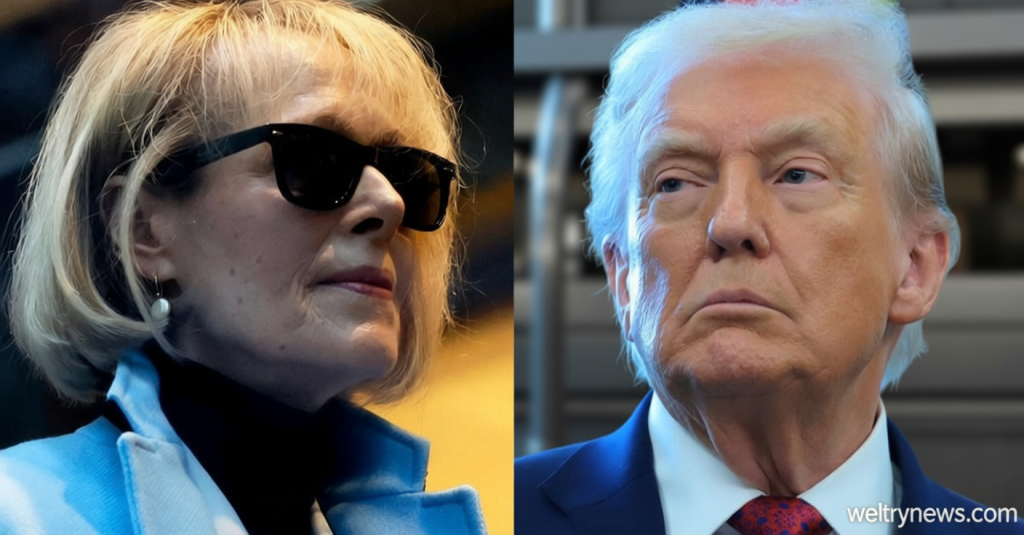
Supreme Court Won’t Hear Trump’s Appeal in E. Jean Carroll Sexual Abuse Case
Wertynews.com – The Supreme Court has officially decided not to review the appeal from former President Donald Trump regarding his sexual abuse case against E. Jean Carroll. This landmark decision marks the conclusion of Trump’s effort to challenge the jury’s verdict, which found him liable for sexually assaulting and defaming the writer in a 2023 civil trial. The ruling reinforces the judgment made by the Second Circuit Court of Appeals in December 2024 and June 2025, effectively ending Trump’s attempt to overturn the verdict through the nation’s highest court.
Jury Verdict and Legal Process
The jury’s unanimous finding in Carroll’s case centered on an incident that occurred during the 1990s at a New York City department store. The trial, which spanned eight days, saw Trump absent from the courtroom and his legal team presenting no witnesses to support his claims of innocence. Jurors deliberated for less than three hours before awarding Carroll $5 million in damages, a figure that was later increased to $83 million after additional findings related to defamatory statements. The verdict has been hailed as a significant victory for victims of sexual misconduct, particularly in the context of high-profile political figures.
The Supreme Court’s decision not to hear the appeal is based on the legal principle that the verdict should stand unless there is a compelling reason to revisit it. Carroll’s attorneys argued that the evidence presented during the trial, including testimony from multiple women who described similar patterns of behavior by Trump, was sufficient to support the jury’s conclusion. The absence of Trump’s witnesses during the trial further weakened his case, as the jury relied heavily on the testimony of Carroll and other survivors to assess the facts.
Carroll’s Legal Battle and Public Impact
Carroll’s victory has been described as a “tremendous win” for women’s rights, with her legal team emphasizing the strength of the evidence and the consistency of the testimonies. She celebrated the outcome in a Substack post, stating, “WE WON!” and calling the ruling a “tribute to women globally.” The decision also has implications for the broader legal landscape, as it may set a precedent for how sexual misconduct claims are handled in high-profile cases involving public figures.
Trump’s legal team, however, defended their strategy, arguing that the case was a “Democrat-funded” hoax designed to target him politically. They framed the ruling as a setback for “Liberal Lawfare,” a term used to describe what they claim is the use of legal procedures to pursue political agendas. Despite these arguments, the Supreme Court’s decision to reject the appeal has been seen by many as a reaffirmation of the jury’s role in determining the facts of the case, rather than allowing political considerations to override them.
Testimony and Evidence in the Trial
Central to the trial was Carroll’s account of the 1990s incident, during which she claimed that Trump sexually assaulted her after she accidentally knocked over a display at a department store. The evidence included a detailed timeline of the event, as well as testimony from other women who described similar encounters with Trump. These testimonies were used to establish a pattern of behavior, which the jury found credible enough to support the verdict.
Additionally, the trial featured the presentation of the “Access Hollywood” clip, where Trump famously remarked about grabbing women’s genitals. While this clip was not directly related to the specific incident with Carroll, it was used to contextualize his broader attitudes toward women. The jury’s decision to award damages for defamatory statements also underscored the importance of preserving the reputations of individuals who have been accused of misconduct. Trump had previously denied the allegations since 2019, but the evidence presented in the trial has led to a more definitive judgment against him.
Broader Implications for Legal Precedent
The Supreme Court’s decision not to review the case may have long-term implications for how sexual abuse claims are adjudicated in the United States. Legal experts note that the ruling could embolden other victims to pursue similar cases against public figures, knowing that the Supreme Court is less likely to intervene. It also signals a shift in the legal approach to such cases, where the burden of proof lies with the defendant to demonstrate a clear reason for overturning the jury’s decision.
Furthermore, the case has sparked discussions about the role of the Supreme Court in reviewing lower court decisions. While the Court is traditionally seen as a final arbiter of legal disputes, its decision to dismiss this appeal has raised questions about its willingness to address cases involving high-profile defendants. The ruling may also influence future litigation, as it sets a precedent for the court’s approach to appeals in sexual abuse cases.