
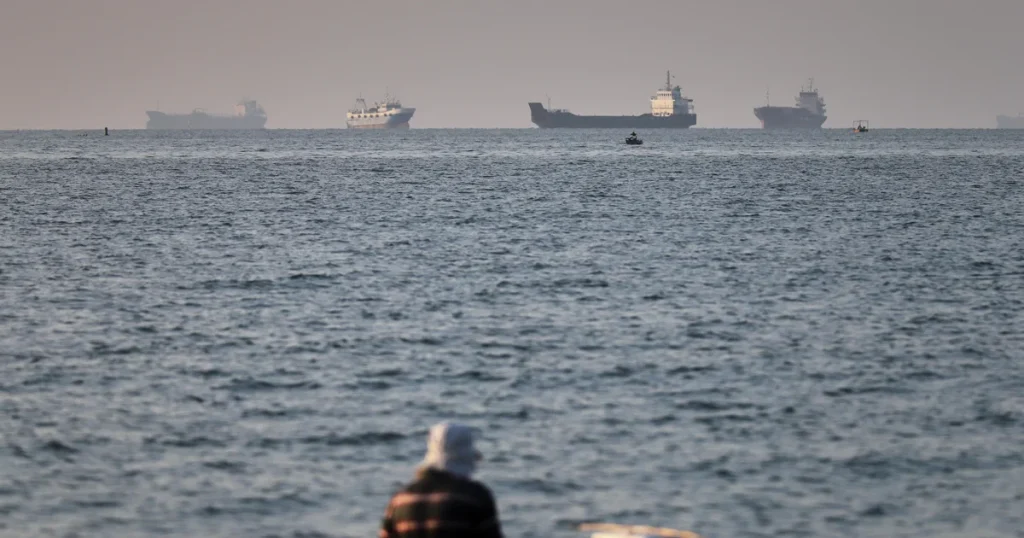
Trump Claims Hormuz is Safe, Secure, and Pristine—Industry Uncertain
Wertynews.com – President Donald Trump recently declared the Strait of Hormuz “safe, secure, and pristine,” signaling optimism about the strategic waterway’s future. However, shipping companies across the globe remain unconvinced, with many expressing concerns over the ongoing security risks and logistical challenges. The U.S.-Iran agreement to ease maritime restrictions, set to be finalized in Switzerland, has sparked cautious optimism, yet the industry continues to monitor developments closely.
Strait of Hormuz and the Ceasefire Agreement
The Strait of Hormuz, a vital chokepoint for global energy trade, has been at the center of geopolitical tensions following Iran’s attacks on commercial vessels. Before the conflict escalated, the strait accounted for about 20% of the world’s oil and gas shipments, making it a critical artery for global markets. Trump’s administration announced a tentative agreement to lift these restrictions, aiming to restore normalcy and ensure uninterrupted shipping through the waterway. The deal, expected to be signed by U.S. and Iranian officials, could mark a turning point in the region’s security dynamics.
“I hereby fully authorize the toll-free opening of the Strait of Hormuz, and, simultaneously herewith, authorize the immediate removal of the U.S. Naval blockade,” Trump stated on his Truth Social platform. This declaration, made amid ongoing negotiations, was intended to reassure international stakeholders that the strait would once again be a stable route for trade.
Despite Trump’s assurances, the Joint Maritime Information Center (JMIC) has issued a cautionary statement, noting that the security threat level in the strait remains severe until the ceasefire is fully implemented. The JMIC’s advisory highlights the persistent risks, including potential attacks on ships and the lingering impact of the U.S. naval presence in the region. While the agreement offers a pathway to resolution, its practical effects on maritime safety are yet to be confirmed.
Industry Responses and Market Reactions
Shipping companies, such as Mitsui OSK Lines and BIMCO, have voiced their skepticism about resuming operations in the Strait of Hormuz. A Mitsui OSK Lines spokesperson emphasized that “operations will not be resumed until safety has been sufficiently confirmed,” reflecting the cautious approach many firms are taking. This hesitation is compounded by the fact that the strait’s security is not just a political matter but also a logistical one, requiring concrete assurances to rebuild trust.
“The next step is for shipowners to be reassured that transiting the Strait of Hormuz is not only permitted but also safe,” said Jakob Larsen of BIMCO. Analysts estimate that full recovery of cargo flows could take up to three to four months, with companies prioritizing risk mitigation over immediate profit returns. Richard Meade of Lloyd’s List noted that “none of this should be mistaken for a return to normality,” underscoring the industry’s lingering doubts.
Market reactions have been mixed. While oil prices dipped by approximately 5% following Trump’s announcement, the drop has not fully restored confidence among shippers. The current low traffic levels compared to pre-war volumes indicate that the global shipping community is still wary. Industry leaders stress that the success of the agreement depends on its implementation and the ability to translate political commitments into tangible security measures for the Strait of Hormuz.
Furthermore, the agreement’s long-term viability is contingent on sustained cooperation between the U.S. and Iran. Trump’s comments on the Strait of Hormuz were part of a broader effort to stabilize regional tensions, but the effectiveness of this diplomatic move remains under scrutiny. The U.S. and Iran’s ability to maintain the ceasefire and address underlying disputes will be crucial in determining whether the strait can truly be considered safe and secure.
Broader Implications for Global Trade
The Strait of Hormuz’s status as a secure shipping route has significant implications for global energy markets. A disruption in this critical passage could lead to energy price volatility, supply chain delays, and increased costs for consumers. Trump’s assertion that the strait is now “safe, secure, and pristine” aims to alleviate these concerns, but the industry’s caution suggests that the situation is far from stable.
“The world’s economy is watching closely to see if the Strait of Hormuz can be restored to its former state of security,” remarked Leon Schulz of Hapag-Lloyd. With the U.S. and Iran’s agreement, the hope is that a long-term solution will be reached, ensuring uninterrupted energy exports and reducing the risk of future attacks. However, the road to recovery may be fraught with challenges, including geopolitical tensions and the need for consistent enforcement of the ceasefire.
As the deal moves forward, shipping companies will likely continue to monitor developments in the region. The Trump administration’s commitment to the Strait of Hormuz’s safety, combined with Iran’s willingness to ease restrictions, could pave the way for renewed confidence. Yet, the industry’s hesitation underscores the importance of sustained progress and clear communication to solidify the strait’s reputation as a secure trade route.