
Potential First Tropical Cyclone of 2026 Approaches Texas Gulf Coast
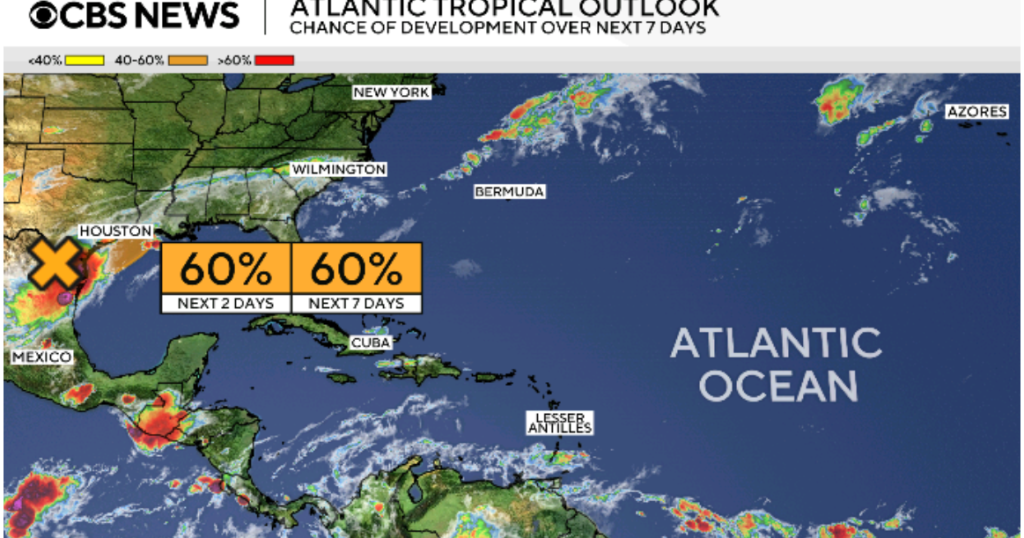
Wertynews.com – The first potential tropical cyclone of the 2026 Atlantic season is forming off the Texas Gulf Coast, raising concerns among meteorologists and residents alike. According to the National Hurricane Center (NHC), a developing tropical disturbance has been monitored closely, with the possibility of intensifying into a fully formed storm within the next 48 hours. This system, currently labeled as Potential Tropical Cyclone One, highlights the early onset of the hurricane season, which typically begins in June.
Current Weather Conditions and Storm Development
As of Tuesday, the NHC reported that the system is situated in the western Gulf of Mexico, approximately 100 miles off the coast of Texas, between Corpus Christi and Lake Charles, Louisiana. It is moving northeastward at a steady pace of 30 mph, slightly below the 39-mph threshold required to classify it as a tropical storm. However, forecasters are closely watching for signs of strengthening, as the system shows potential to develop into a more organized storm by Wednesday.
Weather conditions in the region are already showing signs of instability, with warm sea surface temperatures and low wind shear creating favorable conditions for storm development. The NHC has issued a preliminary advisory, urging coastal communities to stay alert. While the system has not yet developed a well-defined center, its structure is evolving, and the possibility of tropical storm-force winds within the next 24 hours remains a key focus for meteorologists.
Heavy Rainfall and Flooding Threats
Record-breaking rainfall has already impacted the southern United States, with some areas bracing for up to 7 or 8 additional inches of rain by the end of the week. These conditions could lead to significant river flooding, particularly in regions already saturated from earlier storms. The far-western sections of the Florida Panhandle may also experience effects from the system, including gusty winds and heavy downpours.
“Significant river flooding was possible, and in some spots, prolonged rainfall may extend the flood threat into the weekend,” said the National Hurricane Center.
With the potential first tropical cyclone threatening to bring more rain, the flood risk is intensifying. Areas such as Dallas, Houston, San Antonio, and New Orleans are projected to see continued heavy rainfall, particularly over the next 48 hours. Earlier in the week, National Weather Service offices in Austin, San Antonio, and Shreveport, Louisiana, reported record rainfall, with the latter two cities receiving more rain in a single day than they had since the late 19th century. Texas’ capital, Austin, also shattered a daily rainfall record set in 1964.
Preparedness Measures and Community Response
In response to the developing storm, local authorities have issued warnings and advisories to ensure residents are prepared. Emergency management teams are coordinating with the NHC to monitor the system’s progress and assess the risk to coastal communities. Schools and businesses in the affected areas have already implemented contingency plans, with some suspending operations as a precaution.
Residents are advised to secure their homes, clear drains, and keep emergency supplies ready. The potential first tropical cyclone could cause widespread disruption, including power outages, road closures, and property damage. Social media platforms are being used extensively to share updates and safety tips, with communities rallying to support vulnerable populations such as the elderly and those living in low-lying areas.
The NHC is also collaborating with state agencies to provide real-time tracking and forecasts. With the storm’s movement and intensity still uncertain, updates are being closely followed by both experts and the public. This early development of the potential first tropical cyclone serves as a reminder of the unpredictable nature of hurricane seasons and the importance of proactive measures in mitigating risks.