
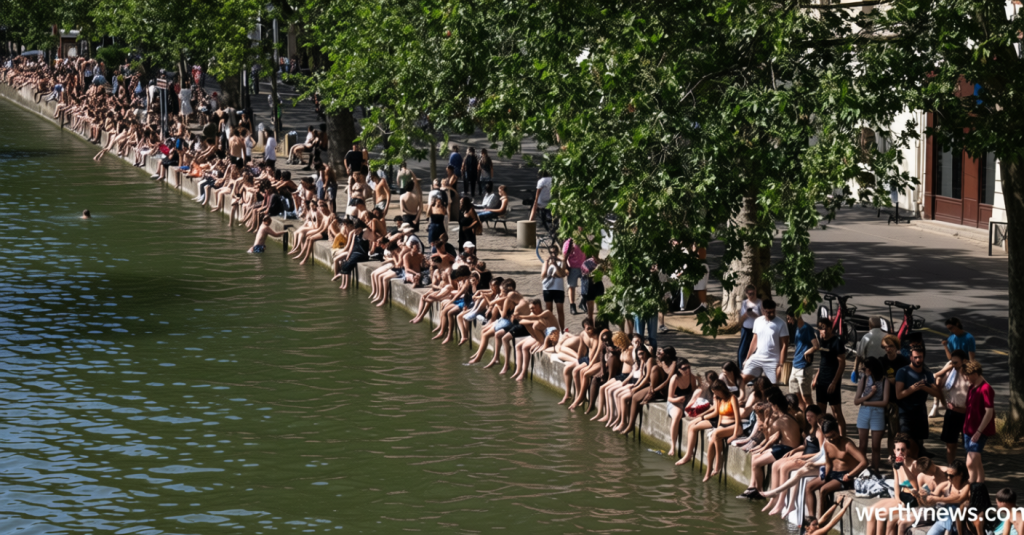
Paris Halts Alcohol Sales to Help Combat Heatwave Crisis
Wertynews.com – Paris halts alcohol sales to help hospitals during a record-breaking heatwave that has overwhelmed emergency services. In a bold move to address the escalating health risks, local authorities have imposed temporary restrictions on alcohol availability, targeting both public and retail sales. The measure, effective from noon on Friday, aims to curb dehydration and heat-related illnesses, as temperatures in the French capital soared to dangerously high levels. By limiting alcohol consumption, officials hope to reduce the strain on healthcare systems and encourage residents to stay hydrated during the crisis.
The decision comes as the heatwave intensifies, with Paris experiencing temperatures that have not been seen in decades. Public drinking will be restricted in designated areas, though exceptions are made for outdoor seating at restaurants and bars. This approach is part of a broader strategy to manage the health impacts of extreme heat, which has already claimed dozens of lives across Europe. The ban is expected to remain in place until the heat emergency is declared over, with authorities monitoring conditions closely for any signs of improvement.
“We are nearing a tipping point in hospital capacity,” said Patrice Faure, head of Paris Police, on Thursday. “Admissions continue to climb… I must act to reduce the strain.”
The statement underscores the urgency of the situation, as hospitals struggle to cope with an influx of patients suffering from heat exhaustion, dehydration, and other temperature-related ailments. Officials emphasized that the initiative is not a permanent policy but a targeted response to the current emergency, reflecting the severity of the conditions.
Paris halts alcohol sales to help mitigate the effects of the heatwave, which has already led to tragic consequences in France. Over 55 fatalities have been reported in recent days, with many victims seeking relief in water bodies such as ponds and lakes. National sports minister Marina Ferrari shared the grim statistics with franceinfo on Friday, warning that the crisis could worsen without immediate intervention. The ban on alcohol sales is seen as a practical step to encourage water consumption and prevent further health complications among the population.
As the heatwave spreads across Europe, other cities are also taking action. The Netherlands declared its first-ever red heat alert, with forecasts predicting temperatures exceeding 100 degrees Fahrenheit. The Dutch national weather service urged citizens to follow guidelines, including staying indoors and keeping hydrated. These extreme conditions are intensifying, with Western Europe warming at three times the global average during the day and twice as fast at night, according to recent climate studies. Paris halts alcohol sales to help address the growing threat of such weather events, which are becoming more frequent due to human-caused climate change.
Scientists Highlight Link Between Heatwave and Climate Change
A new analysis by the World Weather Attribution group attributes the European heatwave to anthropogenic climate change, emphasizing the role of fossil fuel emissions in exacerbating the situation. The study reveals that June’s temperatures would have been “virtually impossible” a half-century ago, with similar events now ten times more likely than in 2003. Researchers argue that the current extreme weather is a direct consequence of long-term climate trends driven by human activities. Paris halts alcohol sales to help align with these findings, as the measure reflects the urgent need to adapt to a changing climate.
“The chance of such a heatwave has transformed dramatically,” noted Theodore Keeping, lead author of the study. “Without climate change, this scenario would not have occurred in June.”
The study also highlights that the heatwave is not an isolated event but part of a pattern of increasing extreme weather. Western Europe is warming at an accelerated rate, with night temperatures rising twice as fast as the global average. These shifts are pushing the region into uncharted territory, where heatwaves are expected to become more intense and prolonged. The ban on alcohol sales in Paris serves as a tangible example of how cities are responding to the immediate and long-term impacts of climate change.