
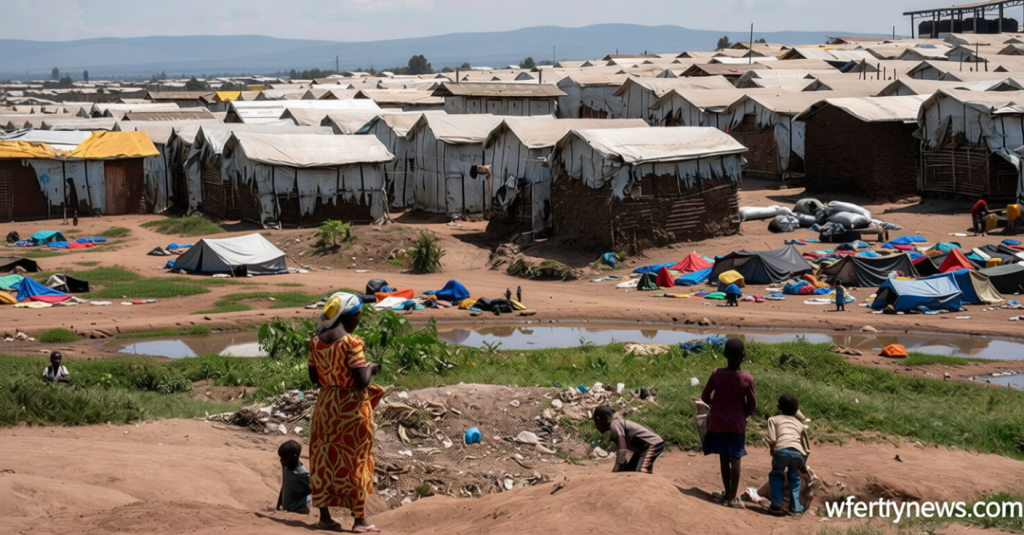
People fleeing conflict in Congo complicate efforts to stop Ebola outbreak
The Conflict’s Role in the Spread of Ebola
Wertynews.com – The ongoing conflict in the Democratic Republic of Congo (DRC) has created a complex challenge for containing the Ebola outbreak. Amid the violence and instability, people fleeing conflict in Congo are not only seeking safety but also inadvertently contributing to the spread of the virus. Health worker Jean Marie Lipe, stationed near the DRC-Congo border, has observed firsthand how displacement disrupts public health initiatives. Despite being at the epicenter of a rapidly expanding epidemic, many residents remain skeptical of the disease, often attributing its spread to supernatural causes or foreign conspiracies. This mistrust has been evident in cases like that of Grandmother Passy Nzali, who initially doubted the virus’s existence before acknowledging its transmission through bats and chimpanzees, especially when they are deceased.
Displaced populations, now numbering in the tens of thousands, have become a significant factor in the outbreak’s progression. As people flee conflict in Congo, they often move into densely packed refugee camps along the border with Uganda, creating ideal conditions for the virus to spread. These environments, characterized by limited access to clean water, sanitation, and healthcare, exacerbate the challenges faced by health officials. Misinformation and fear persist, with some communities resisting vaccination campaigns or quarantine measures. The Africa Centers for Disease Control and Prevention (Africa CDC) has raised concerns about this dynamic, warning that the current crisis could surpass the 2014–2016 West African epidemic in severity if action is not taken swiftly.
“If we don’t stop this outbreak very soon, it will be even worse than what we had in West Africa,” said Africa CDC Director Jean Kaseya. “The movement of people fleeing conflict in Congo is accelerating the spread and complicating our response.”
Global Response and Challenges in Containment
With the current outbreak nearing 800 confirmed cases, the international community has mobilized resources to address the crisis. However, the challenge of people fleeing conflict in Congo has added an extra layer of difficulty. In Uganda, where CBS News visited a quarantine facility, health workers are tasked with monitoring new arrivals while managing the logistical and emotional strain of the situation. James Peter, a recent refugee, is currently isolated for 21 days, highlighting the urgency of containing the virus. His journey from Goma—a city recently targeted by anti-government forces—involved a six-hour crossing of Lake Albert, a perilous route that cost him 40,000 Ugandan shillings, roughly $10, to escape the conflict.
Health officials are now balancing immediate containment strategies with long-term solutions to address the root causes of displacement. The virus’s spread is not only limited to the DRC but has also reached neighboring countries, underscoring the interconnected nature of the crisis. Vaccination drives and community education programs are being intensified, but their effectiveness is challenged by the constant movement of people fleeing conflict in Congo. Dr. Mubiana, a local epidemiologist, emphasized the need for culturally sensitive approaches to combat misinformation. “We must understand the fears of people fleeing conflict in Congo and tailor our messaging to build trust,” she said. This requires a dual focus on both medical intervention and social engagement.
Historically, the DRC has experienced multiple Ebola outbreaks, with the 2014–2016 West African epidemic serving as a grim reference. That outbreak claimed over 11,000 lives and infected more than 23,000 people, marking the deadliest in modern history since the virus was first identified in 1976. Now, as the current epidemic in the DRC intensifies, the situation is compounded by the influx of refugees. These individuals, often carrying the virus without awareness, pose a risk to both local and regional populations. The spread is further complicated by the logistical constraints of operating in conflict zones, where security concerns and damaged infrastructure hinder rapid response efforts.
International aid organizations are working closely with local governments to establish mobile clinics and supply chains. However, the presence of people fleeing conflict in Congo has necessitated the creation of temporary health checkpoints at border crossings. These measures, while critical, have occasionally led to tensions with displaced communities. “We’re trying to protect everyone, but some view these checkpoints as an intrusion,” explained a UN official. The situation also highlights the importance of regional cooperation, as the virus threatens to become a cross-border health emergency. With the DRC’s healthcare system already strained by years of conflict, the added burden of managing an Ebola outbreak is a formidable challenge.
Efforts to stop the Ebola outbreak in Congo are being viewed as a race against time. As people continue to flee conflict in Congo, the number of cases is expected to rise, putting pressure on global health networks. Experts warn that without a coordinated strategy, the outbreak could lead to a prolonged crisis. “The movement of people fleeing conflict in Congo is a critical factor in the virus’s spread,” noted Dr. Sarah Ngoyi, a virologist. “We need to address both the immediate health threat and the underlying social and political factors driving displacement.” This dual approach, combining medical action with humanitarian aid, is seen as essential to mitigating the impact of the outbreak.